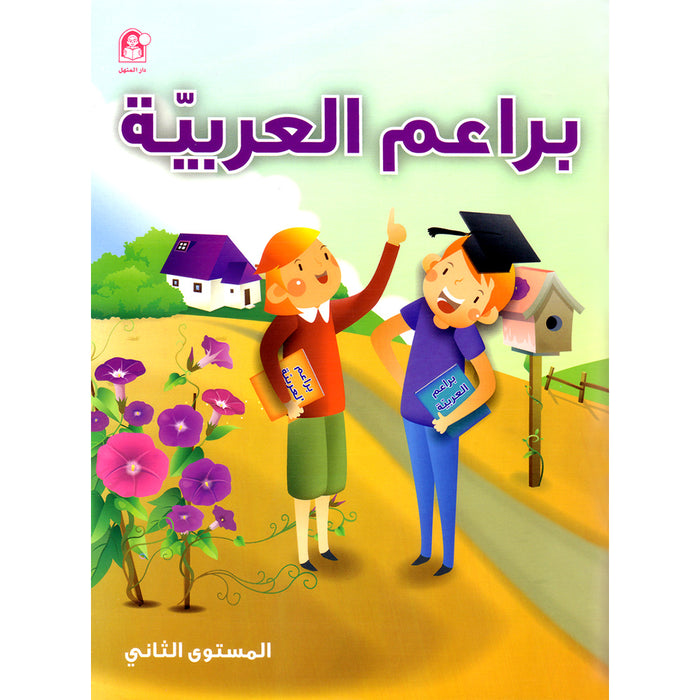
The Arabic Buds series teaches children the basic Arabic skills of listening, speaking, reading and writing. This delightful series educates using various activities, objective lingual games, useful stories and songs, which are easy to learn because they are taken from a child's environment and surroundings. While only one book was created for students on the first level, two books are available for the second level. The first book focuses on reading, and the second book, Exercises and Activities, takes into consideration the child’s level when reinforcing the different lingual skills learned in the first level. Teachers and parents now have the ability to teach their children using one of two approaches: -The first approach is a progressive one, which uses the second level book as a follow-up to the first level book. By following this preferred approach, lingual skills lessons learned in the first level can be reinforced in the second level, guaranteeing the child’s mastery of reading and writing. -The second approach is a stand-alone approach, which has the student starting at the second level instead of the first. While the first approach is preferred, students can start at the second level. This approach was considered when creating the materials for the two levels, as well as in how the Arabic alphabet, short vowels, etc. are presented.
There are two books for the second level of the series “Arabic Buds.” The first book focuses on teaching reading. The second provides various exercises and activities. A CD with songs sung by young children is also included. A number of considerations were given to the preparation of the second level of Arabic Buds such as:
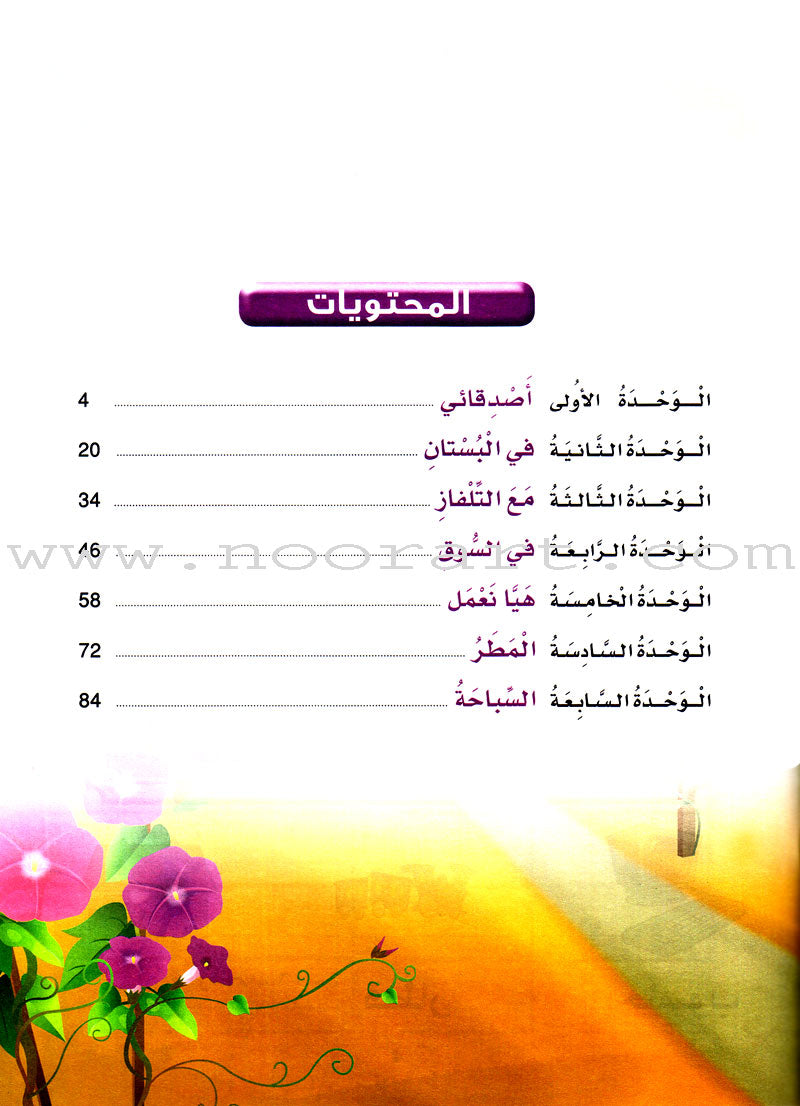
The book is organized into seven units, which include familiar subjects related to the child's life and surroundings: a- Unit One: My Friends b- Unit Two: In the Orchard c- Unit Three: With the TV d- Unit Four: At the Mall e- Unit Five: Let's Work f- Unit Six: The Rain g- Unit Seven: Swimming
Each of the seven units is a gradual introduction, teaching four basic letters in addition to a few short vowels.
From the start, the reading book presents the Arabic alphabet and teaches the short vowels: al-fatha الفتحة, al-dhamma الضمة, al-kasra الكسرة and as-sukoon السكون. The book also gives individual lessons on al-hamza الهمزة, alef الالف , taa al-marboota التاء المربوطة, al-haa الهاء, at-tareef التعريف, tanween al-fat'h تنوين الفتح, tanween ad-dham تنوين الضم and tanween al-kasr تنوين الكسر.
The second level books do not follow the first level teachings, or those commonly found in other Arabic books for beginners. Instead, the books follow another approach, which is more familiar to students, thus making the teaching and learning process easier. Short vowels are also included in the first lessons of the book so children can more easily build upon these concepts. Similar letters used in writing and speaking have been grouped together in the units for easier instruction. For example, the letter دال (daal) is introduced in the second unit while the letter ذال (thaal) is in unit five. The letter جيم (jeem) is in unit three, خاء (khaa) is in unit five, عين ('ayn) is in unit six, and the letter غين (ghayn) is in unit seven. By following this approach of teaching Arabic letters and words, children can more easily master the necessary Arabic language skills, including reading, analyzing and writing.
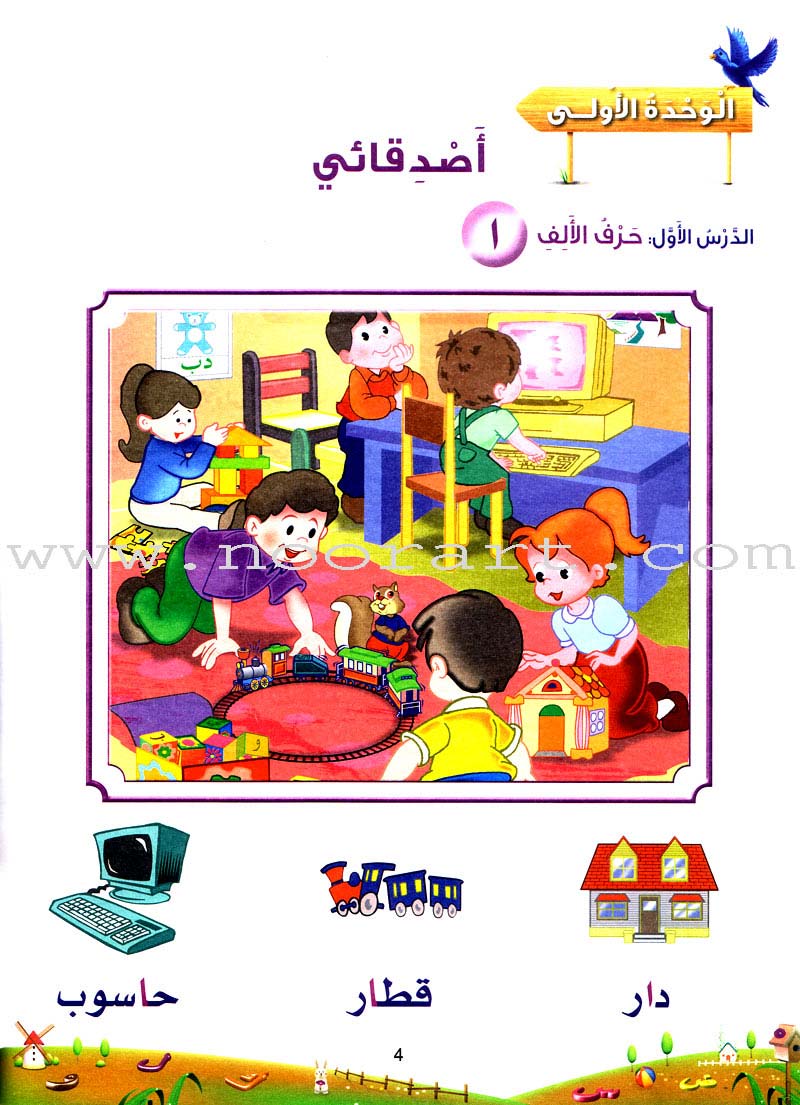
Each of the book's seven units starts with a full-page picture and a story or lovable child-friendly tale composed of basic and familiar words introduced in that unit. For instance, "Unit One: My Friends" includes a story that discusses the concept of friendship and focuses on positive values such as cooperation, respect for others and love. The story told by the teacher also includes a guide containing the lesson’s basic words found in the story and throughout the unit: home, train, computer, oranges, mountain, playground, book, houses, roses, hand, bed, patient, tea, cow, duck, water, rabbit, and pears.
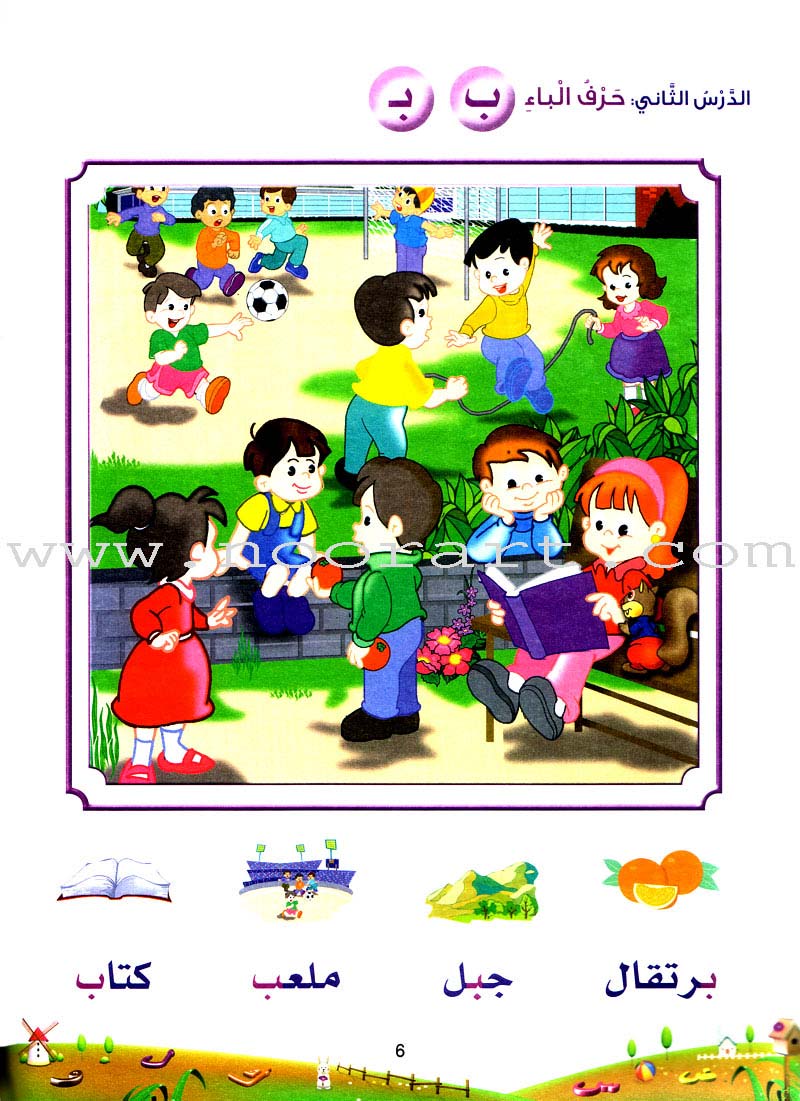
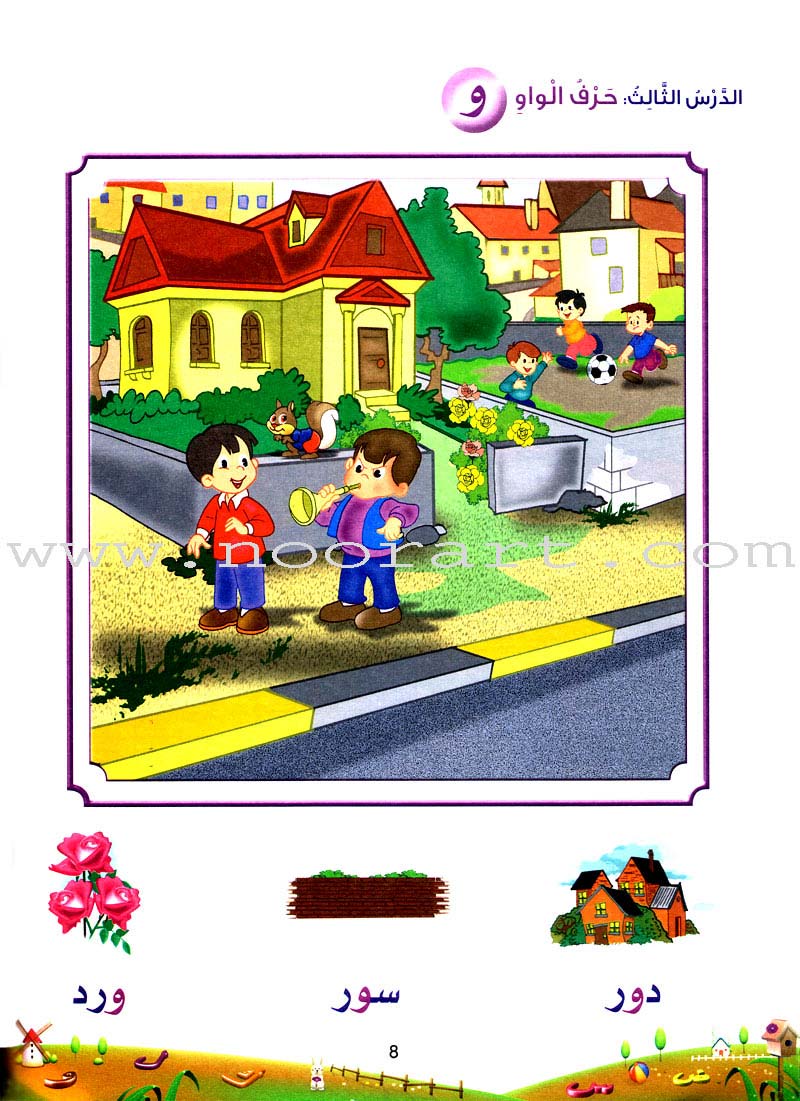
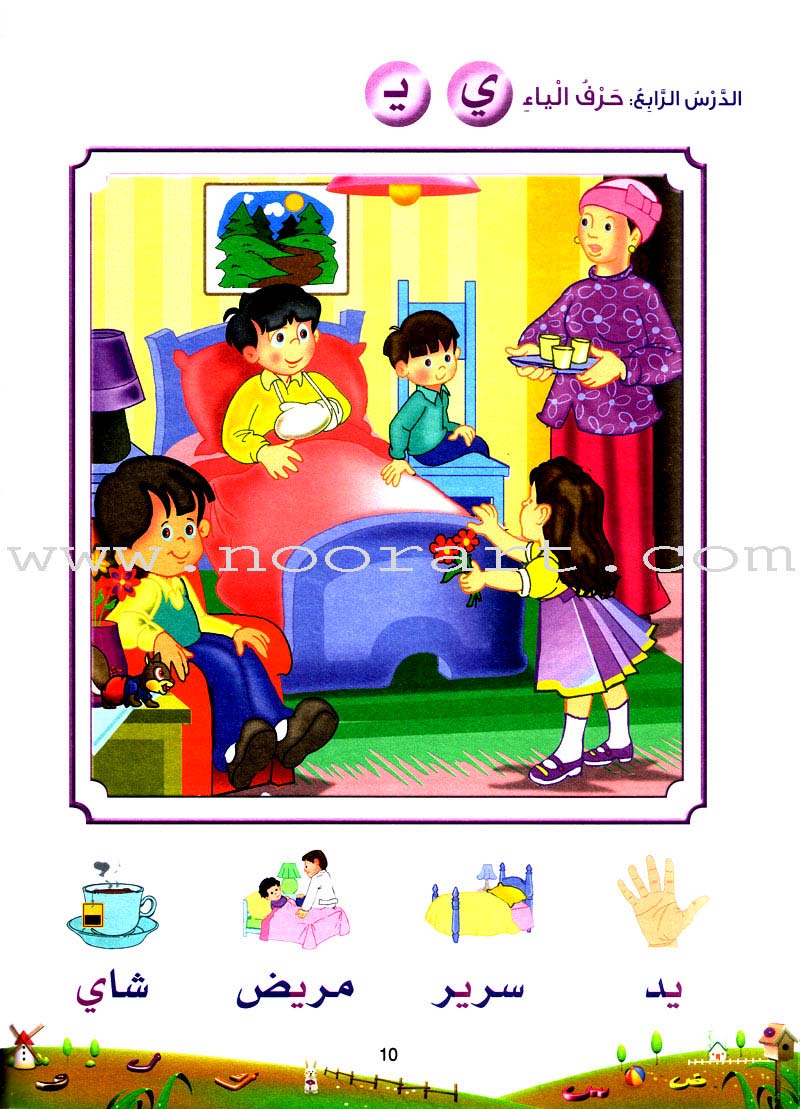
Each of the unit lessons includes a conversation picture, which is a part of the larger full-page unit picture. This picture represents a story, situation, scene, or a number of situations and scenes designed to introduce and teach the intended letter. The story re-enforces the basic words that contain the intended letter. In "Unit Two: In the Orchard", for example, the first lesson teaches the letter دال (daal). Therefore, the story concentrates on the words that contain this letter, especially the words in the reading lesson like دجاجة (chicken), ديك (rooster) and وادي (valley). In "Unit Four: In the Mall", the first lesson teaches the letter شين (sheen). The story concentrates on the words that contain this letter, especially the words in which the letter appears in an abstracted form like شراب (juice), قشور (peels), مشمش (apricots) and قماش (fabric).
The words intend to teach the letter appear after the partial picture. For instance, in lesson one of "Unit Five: Let's Work", the objective of the lesson is to teach the letter صاد (saad) in its two forms (ص & صا). This letter and its two forms appear at the top of the picture. Each word, from which the basic words are extracted, is placed under the picture. In this lesson, the pictures and corresponding names are displayed: صندوق (box), عصفور (bird), قفص (cage) and مصاص (lollipop). The first and second words contain the letter صاد (saad) in its partial form, while the third and fourth words contain the same letter in its full form. To provide clarity, the first letter صندوق (box) starts with the letter صاد (saad), and the second word عصفور (bird) with the letter صاد (saad) comes second but is similar in form to the first word. In the third word قفص (cage), the letter صاد (saad) is in its full form but attached to the word at the end, and close to that its form in the fourth word مصاص (lollipop), even though it contains the two forms of the letter connected and the full form at the end of the words. To allow students to distinguish the two forms of the letter صاد, the connected form of the word is painted in blue and the full form is painted in red. This is the method used to record the different forms and shapes of the letters in all lessons in the seven units.
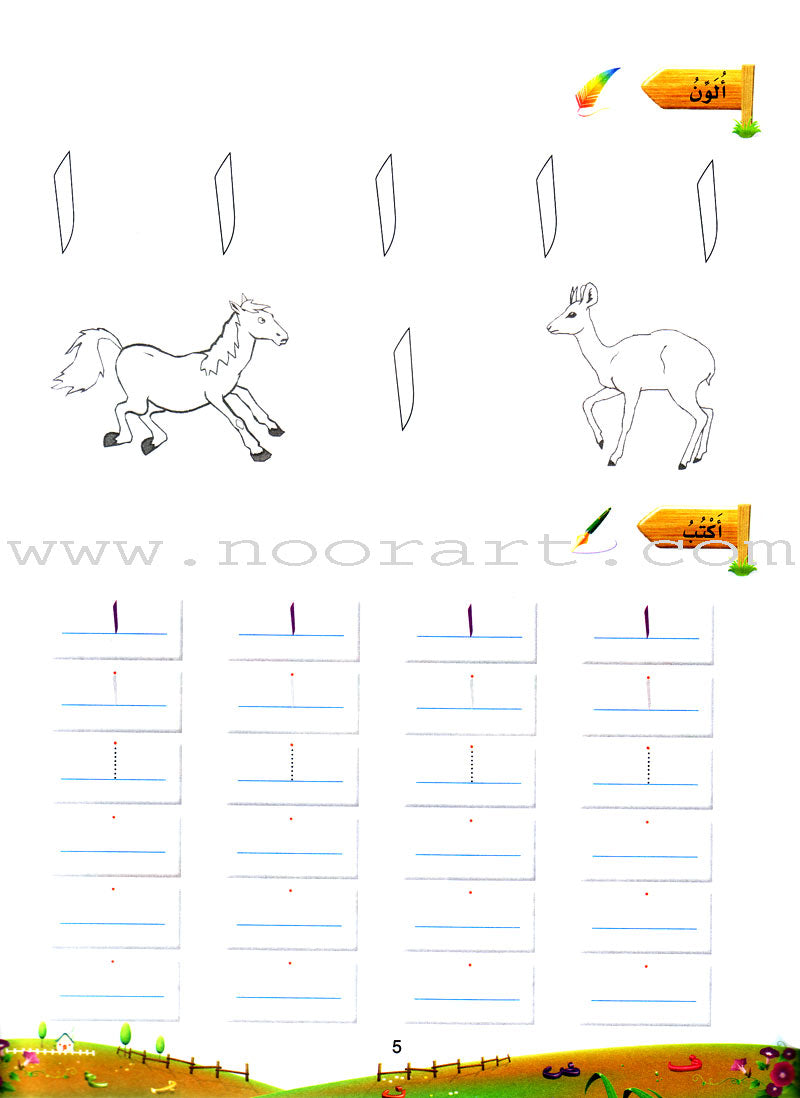
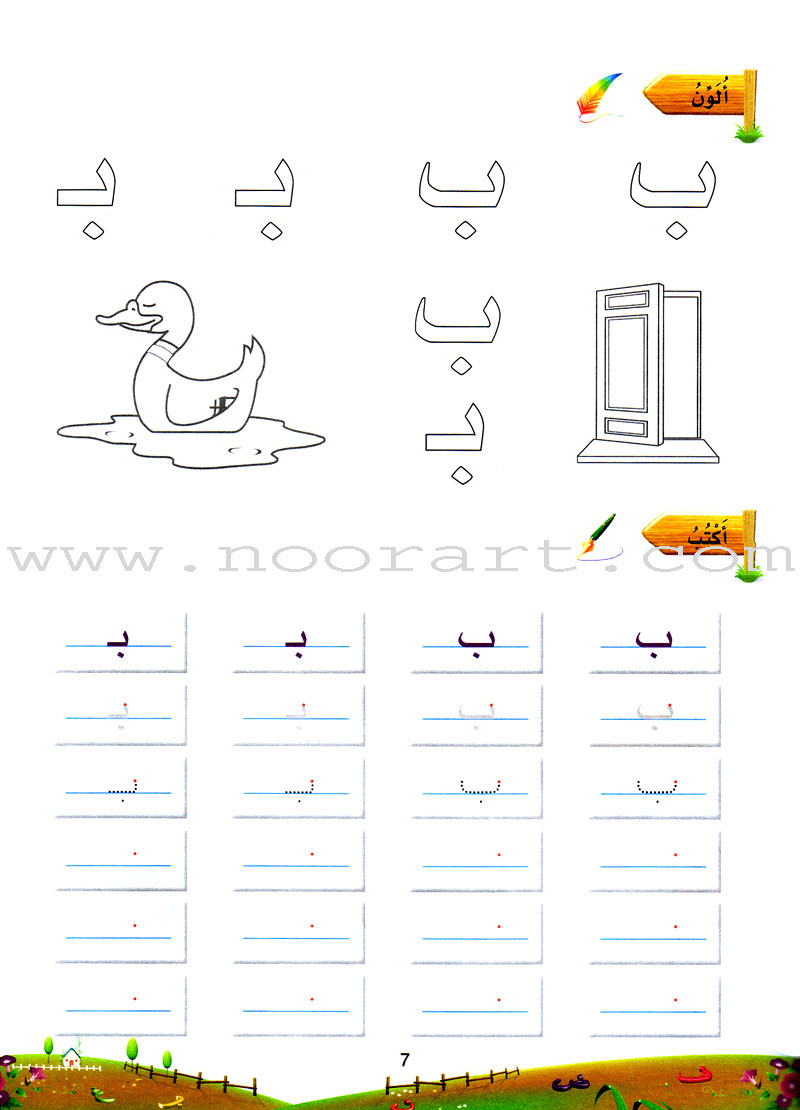
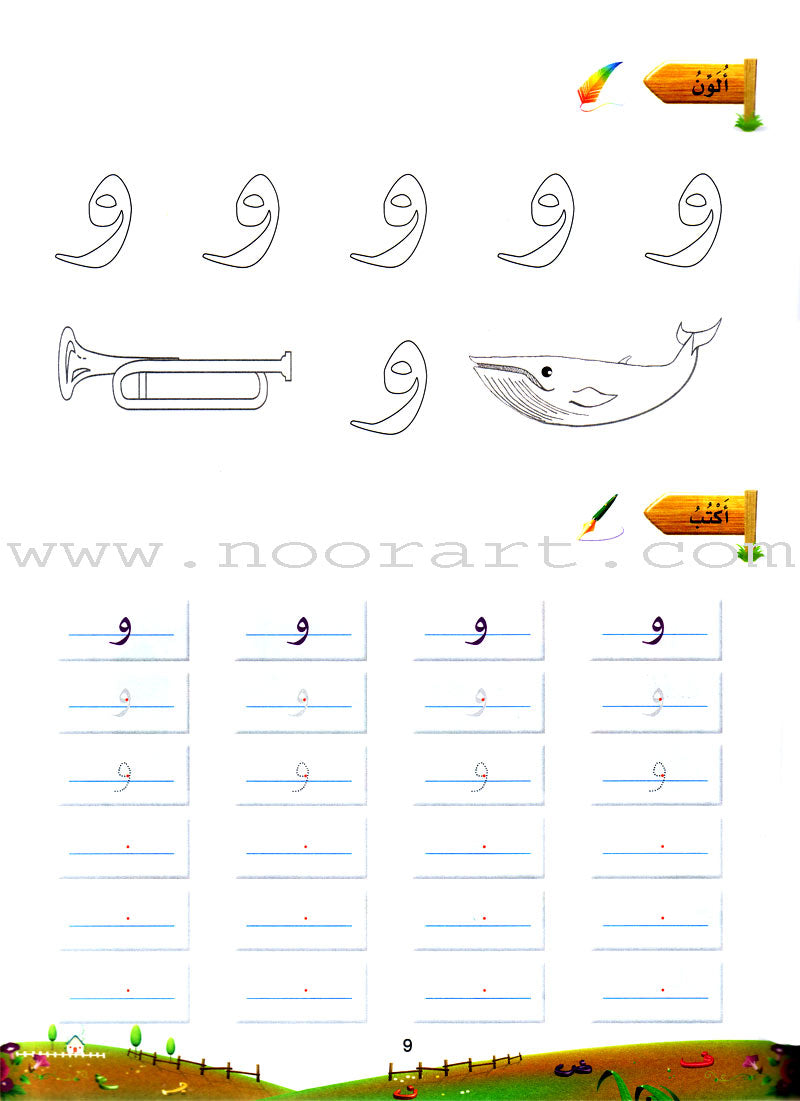
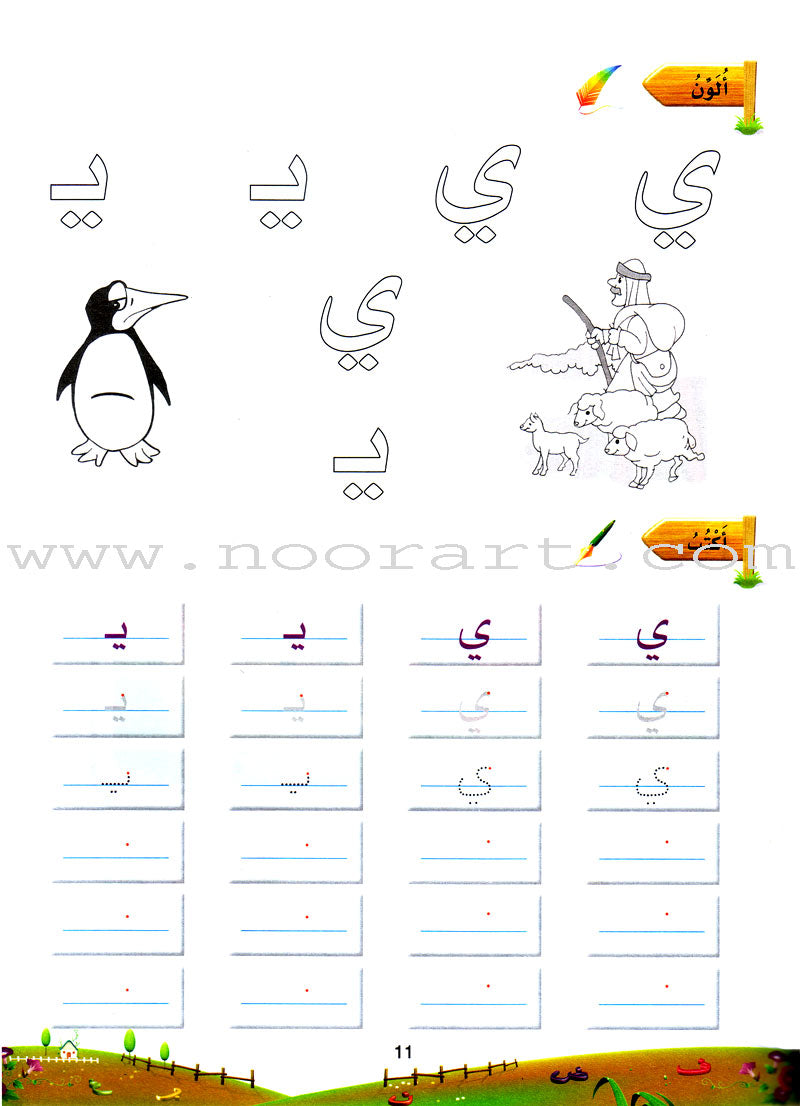
Different patterns of exercises are used such as asking the child to match the letter with the picture that contains it, and to color the letter taught in all forms.
After the reading activity for each lesson is the written activity. Students are asked to write the letter in its two basic forms like the letter القاف (qaaf) or عين ('ayn). In addition to writing letters with short vowels, the written activity stresses the importance of writing complete words consisting of the letters they have learned.
The reading book contains a number of visual, oral and written exercises to review the different lingual skills the child learns in the different units of the book.
Various exercise for each reading lesson, available in the exercise and activity book, allows the teacher to easily transition into these exercises once they have finished the readings. Many of the exercises are ideas for educational games that teachers can use in educational corners (areas in a classroom set aside for specific activities or skills).
Most units in the reading book include conversational pictures that prompt a child’s writing skills while focusing on positive values, developing good manners and avoiding bad habits. For example, the picture Salwa’a Integrity in unit four focuses on integrity and its importance in a child’s life. Similarly, the "Unit Five: Let's Work" picture Work is Useful shows the importance of work and the need to abandon laziness.
Each unit concludes with a beautiful song related to the unit’s topic, designed to focus on the positive values and directions that the unit intends to pass on to children. These songs, sung by children, can be listened to at anytime the teacher finds suitable.
The composing analyzing method that joins the features of the partial and complete ways of teaching reading for beginners was used in creating this series.
Teacher recommendations and a guide to further reading are included at the end of each unit. Recommendations include stories from the Reading Club published by Al-Manhal Publishing and Distribution House. These stories help to enforce the positive values and directions while growing the different language skills the unit intends to teach and expand upon. These stories are suitable for children in the early stages of reading.
Throughout the lessons, the focus is placed on the necessity of using different lingual games to contribute to the positive development of the child so they may learn both in and out of the classroom in an interactive and affirming environment.
تأتي سلسلة "براعم العربية" لتعليم الأطفال المهارات الأساسية للغة العربية وهي: الإستماع، والمحادثة، والقراءة، والكتابة. وتهتم هذه السلسة اللمتعة بالتعليم عن طريق الأنشطة المتنوعة والألعاب اللغوية الهادفة، والحكايات المفيدة والأناشيد المغنّاه. وتتميز بسهولة تعلمها، منطلقة من بيئة الطفل ومحيطه. وقد حرصنا على أن تتجاوز القراءة والكتابة في كتاب واحد في المستوى الأول، نظراً لحداثة سن الأطفال، ولأنهم في هذا المستوى يكونون حديثي عهد بتعلم العربية في رياض الأطفال. أما المستوى الثاني فقد جعلنا له كتابين، فكان كتاب التمارين والأنشطة منفصلاً عن كتاب القراءة، وجعلنا التمرينات القرائية والكتابية أكثر تنوعاً وشمولاً في هذا المستوى، بعد أن عرف الطفل مبادئ القراءة والكتابة، إذ جاء المستوى الثاني تعزيزاً للمستوى الأول ودعماً له، دون أن نغفل عن التركيز على المهارات الأساسية للغة في كتابي المستوى الثاني، إذ ارتأت المربية أو أولو الأمر أن يبدأوا بتعليم الطفل العربية ابتداءً من هذا المستوى.
Take a moment to review this product! Let us know the pros and the cons, and share your thoughts about it. Your input will help other customers make better purchases and product choices from Noorart.com. We appreciate your feedback!
Click here to write a review