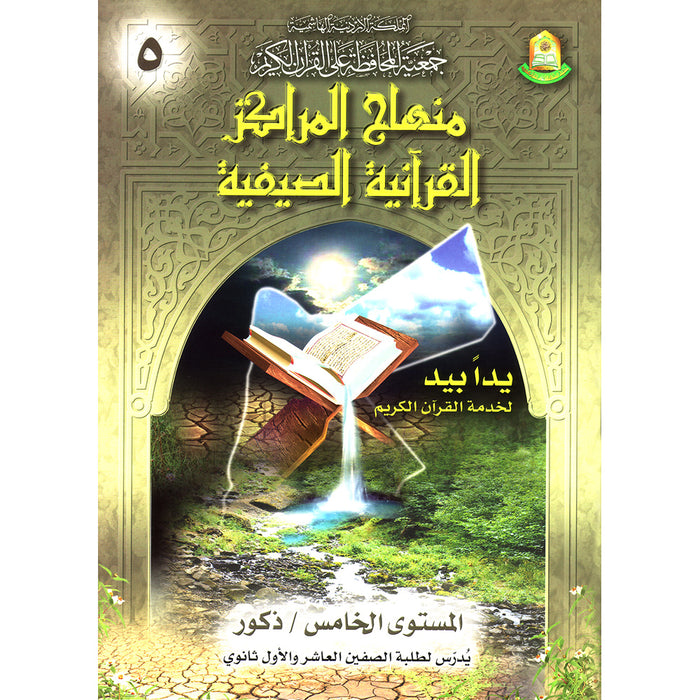
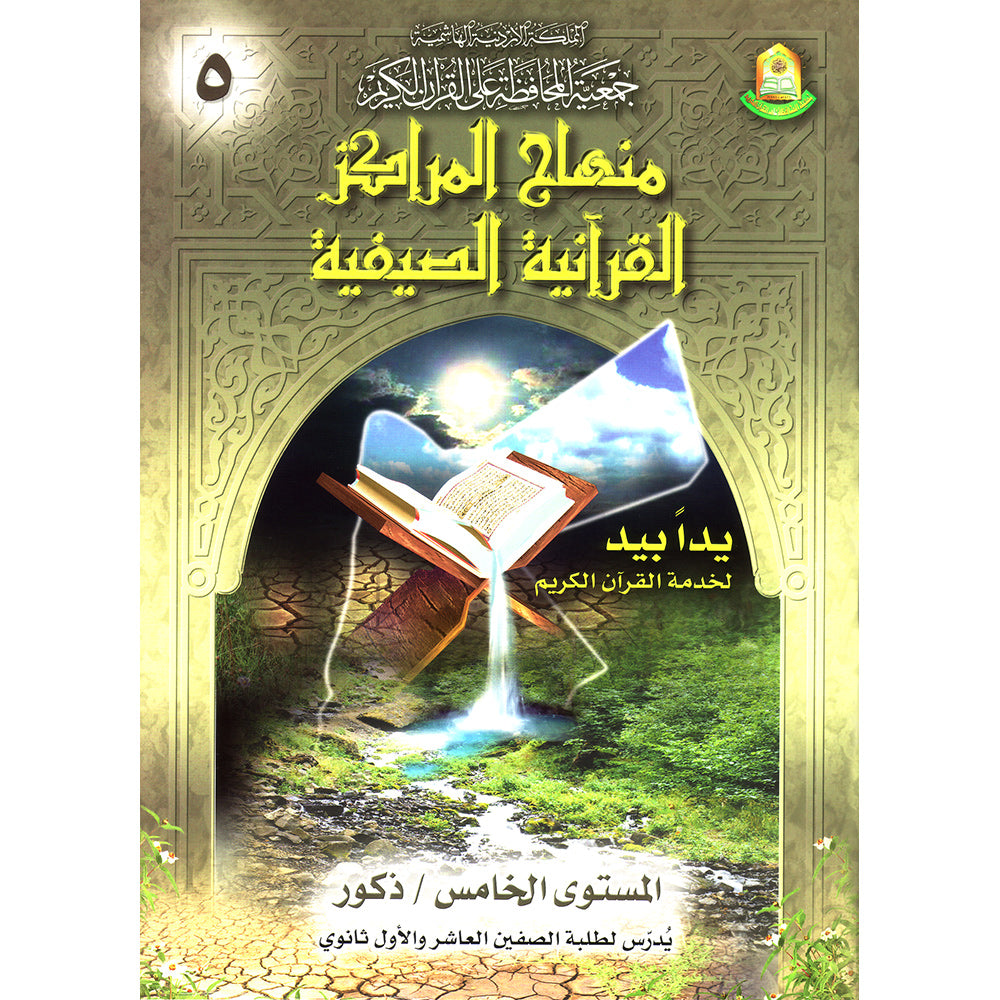
The Summer Qur’anic Centers CurriculumFifth Level (Male Only)
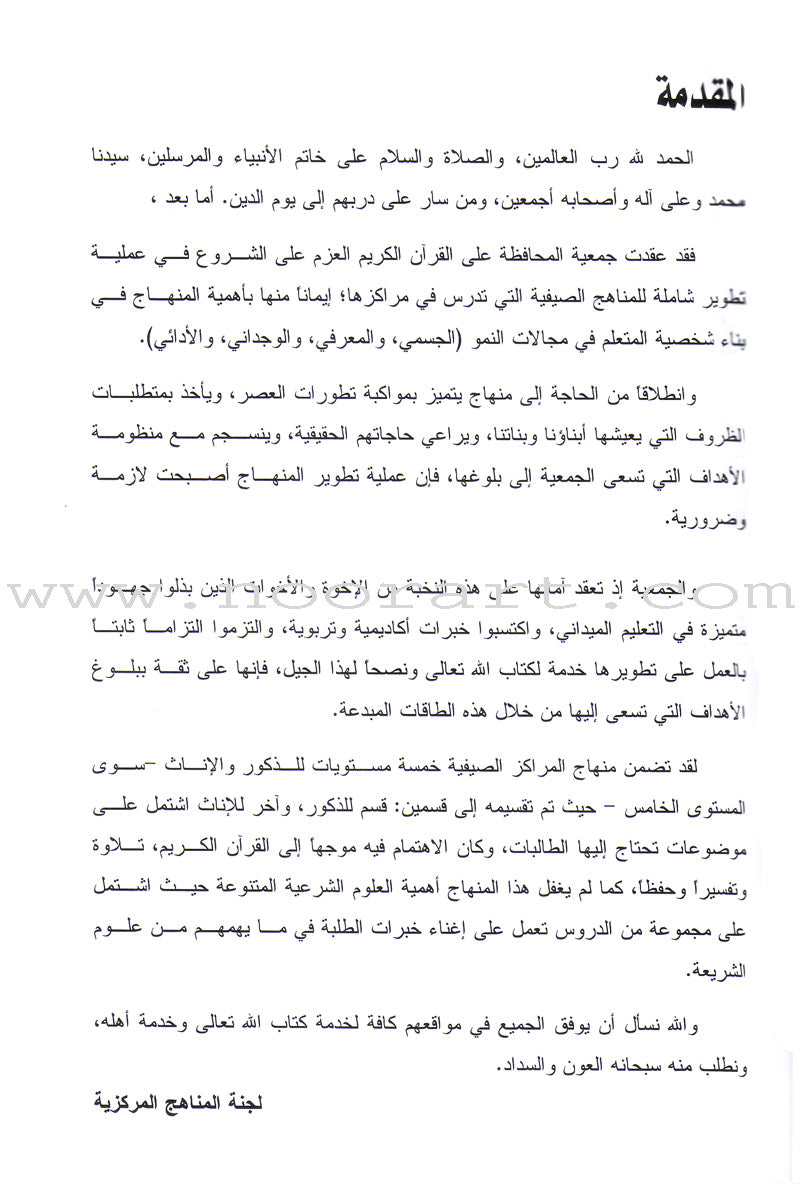
For Tenth and Eleventh Grade studentsUnderstanding the importance of the curriculum in building the learner’s personality within aspects of human growth (physical, cognitive, emotional, and motor development), a thorough development process for the curriculum of the Permanent Qur’anic Centers took place.Regarding the number of notes and remarks in teachers’ questionnaires, a curriculum development process became essential to encounter the need of a curriculum which sustains modern development, considers the circumstances our boys and girls are living in, regards their actual needs, and harmonizes with the goals system which the society tries to achieve.The Summer Qur’anic Centers Curriculum includes five levels for males and females (except the fifth level as it is divided into two parts; one for males, and another for females, topics of which concern only the female students). Most of the concentration is given to the Holy Qur’an (tilawa, tafseer, hifz). The curriculum does not overlook the importance of the various Islamic studies but it contains a group of lessons that enrich the learners’ experiences in Islamic studies topics that concern them.
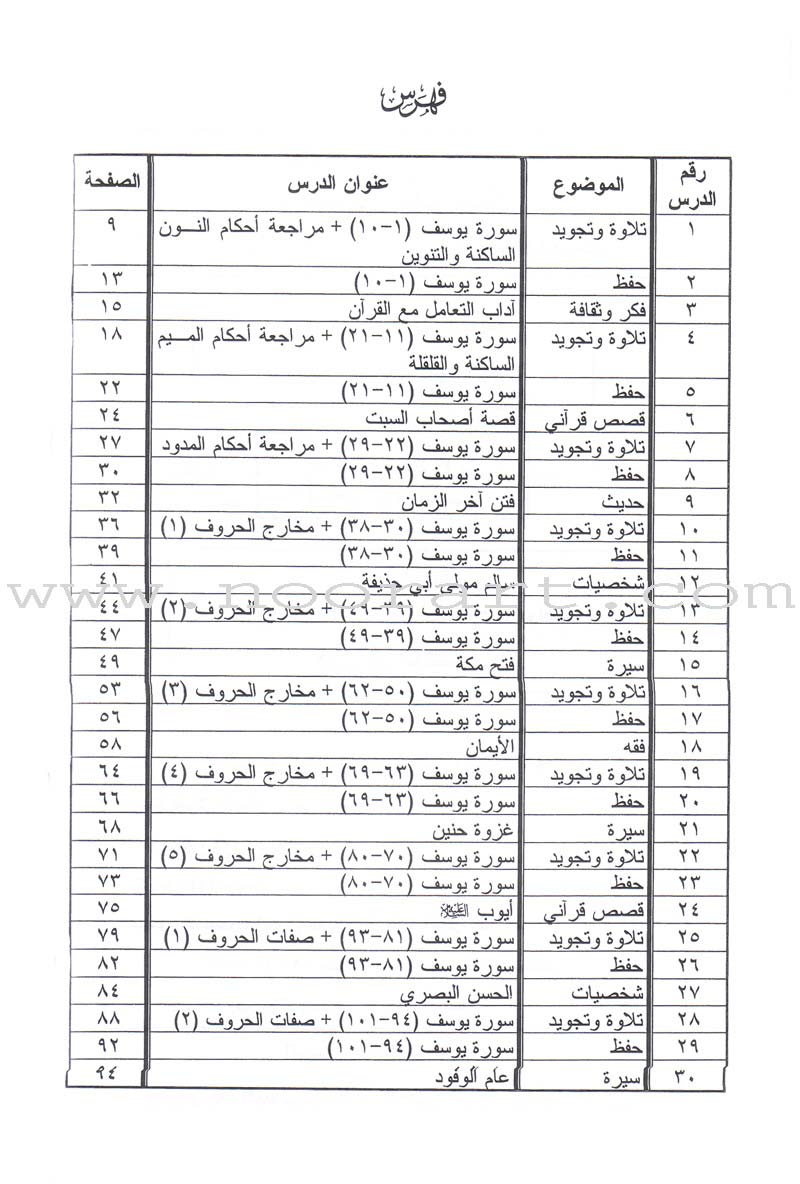
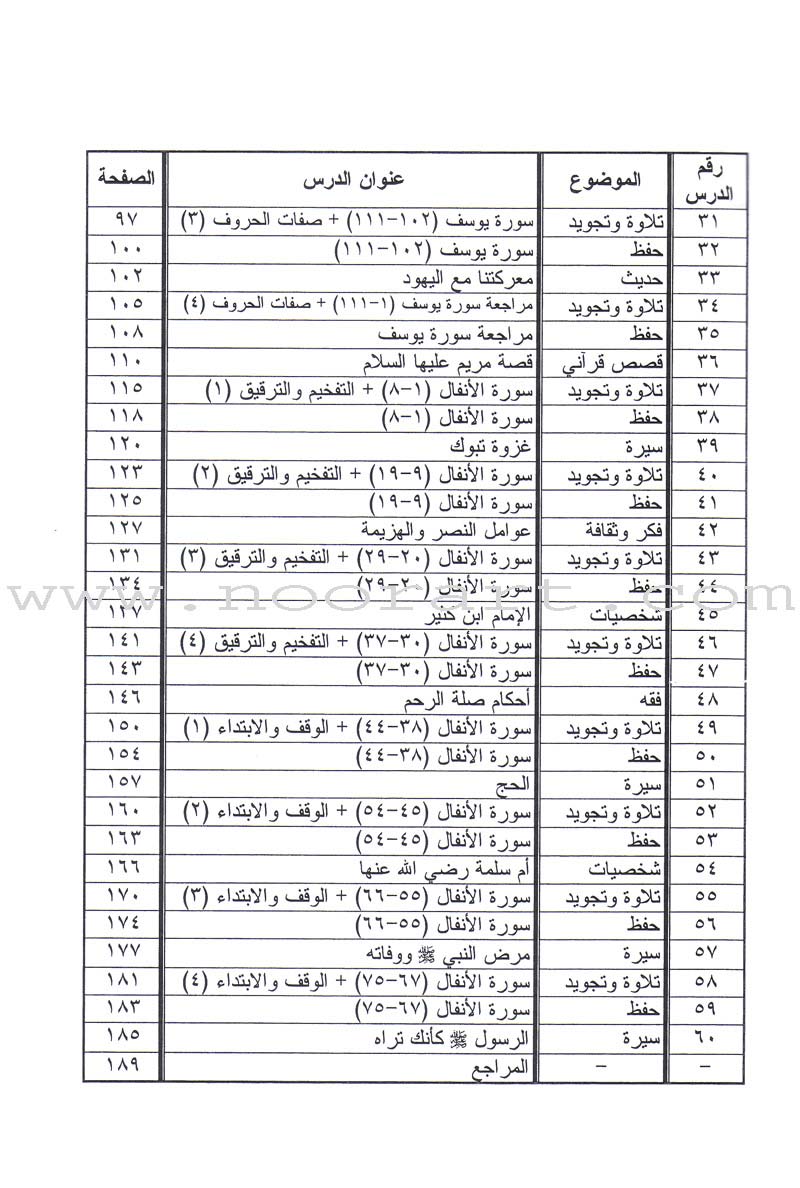
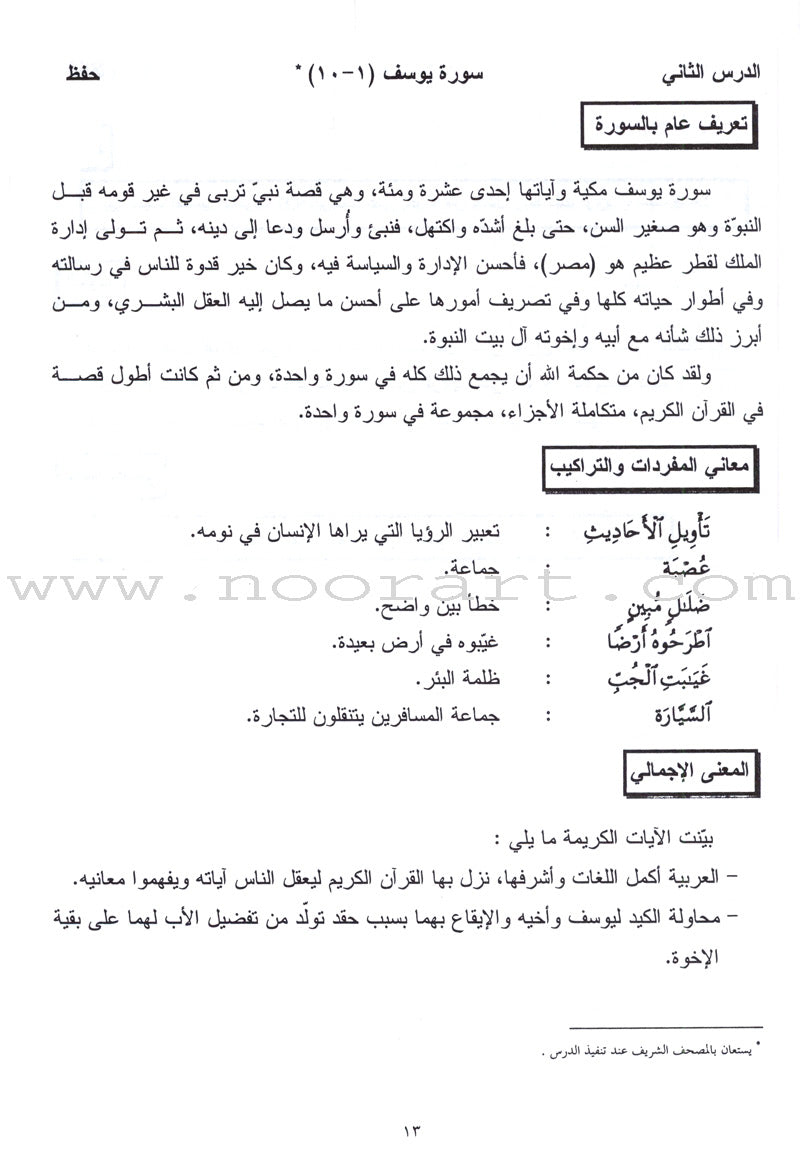
The fifth level of The Summer Qur’anic Centers Curriculum (Male Only) addresses the following surahs for the lessons of tilawa (ritual recitation of Qur’an), tajweed (recitation of Qur’an), and hifz (memorizing ayaat): Surat Yoosuf and Soorat Al-Anfaal.
It addresses other topics from the Biography of Prophet Muhammad (s) including the Conquest of Mecca, the Battle of Hunayn, the Year of Delegations, the Battle of Tabook, the Prophet's (s) pilgrimage, the Prophet’s (s) illness and death, and about dealing with the Prophet (s) as if one is seeing him.It includes hadeeth on the temptations of the end of time and the believers' struggle with the Jews. Also, it contains lessons about the life of some model characters and heroes such as: Salim Mawla Aby Huthayfa, Al-Hasan Al-Basri, Imam Ibn Katheer, and Um-Salama (raa).
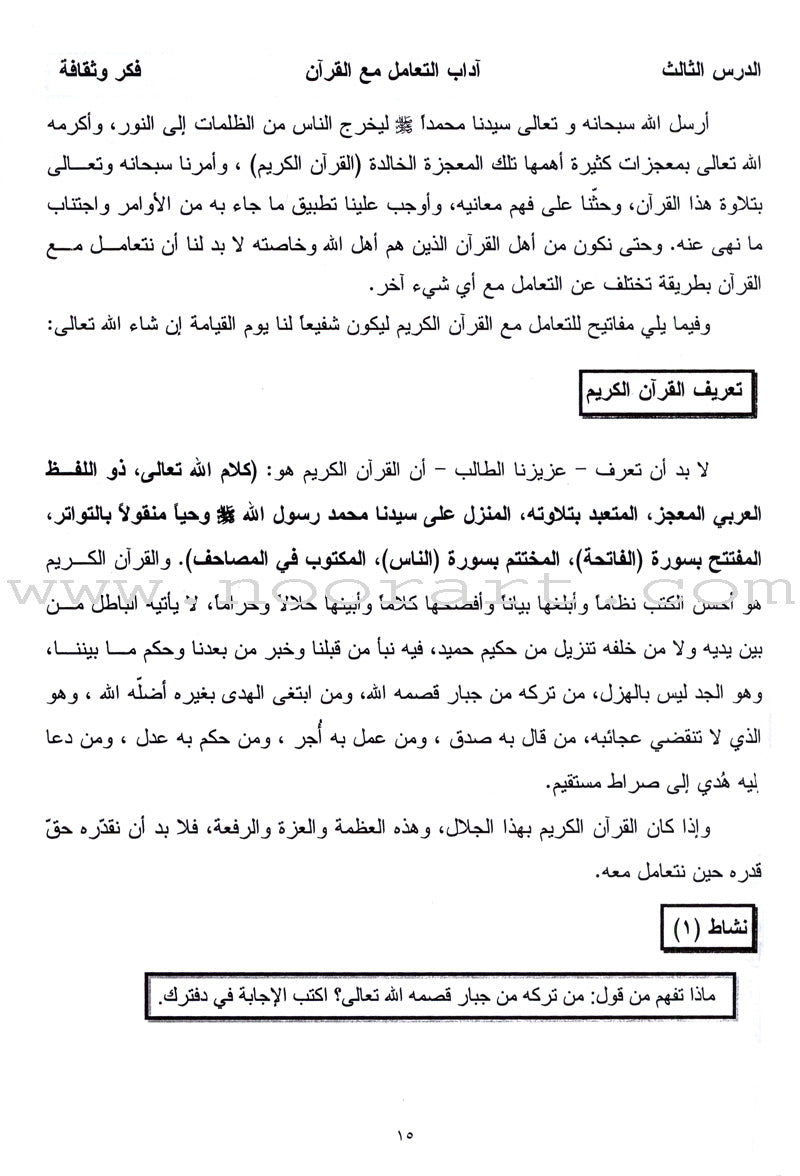
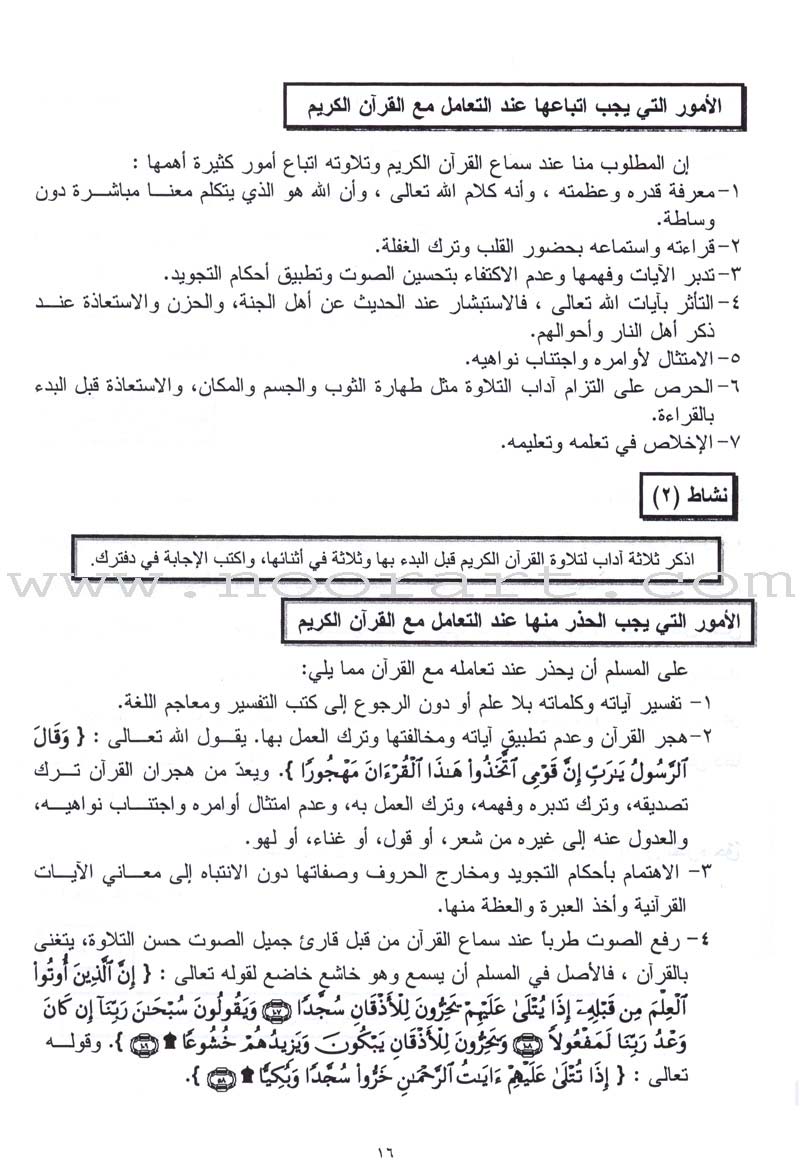
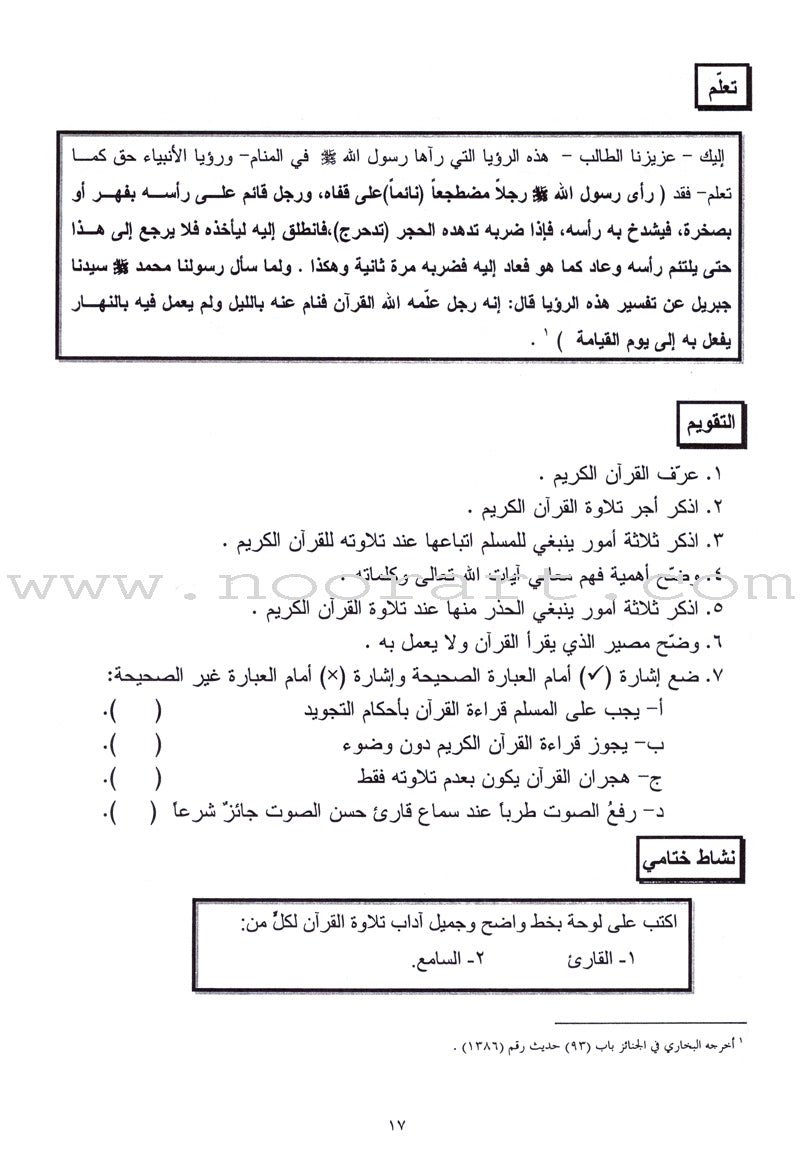
In addition, the book presents topics in fiqh (Islamic jurisprudence) such Eemaan (Belief), and the provisions of visiting relatives. Students will study lessons on Islamic thought and the topics of manners in dealing with the Qur’an, and the factors of victory and defeat. Finally, there are stories from the Qur’an about the People of Saturday, the story of Prophet Ayyoob (as), and the story of Maryam (as).
مناهج المراكز القرآنية الصيفية
المستوى الخامس ذكور
يدرس للصفين العاشر والأول ثانوي
لقد تم القيام بعملية تطوير شاملة لمناهج المراكز القرآنية الدائمة، إيماناً بأهمية المنهاج في بناء شخصية المتعلم في مجالات النمو (الجسمي، والمعرفي، والوجداني، والأدائي).
وانطلاقا من الحاجة إلى منهاج يتميز بمواكبة تطورات العصر، ويأخذ بمتطلبات الظروف التي يعيشها أبناؤنا وبناتنا، ويراعي حاجاتهم الحقيقية، وينسجم مع منظومة من الأهداف التي سعينا إلى بلوغها، فإن عملية تطوير المنهاج أصبحت لازمة وضرورية. آخذين بعين الإعتبارلذلك عدداً من الملاحظات والتنبيهات الواردة في استبيانات المدرسين .
تضمن منهاج المراكز القرآنية الصيفية خمسة مستويات للذكور والإناث – ما عدا المستوى الخامس – حيث تم تقسيمه إلى قسمين: قسم للذكور، وآخر للإناث اشتمل على موضوعات تحتاج إليها الطالبات. وجّه جل الاهتمام في هذه الكتب إلى القرآن الكريم تلاوةً وتفسيراً وحفظاً، ولم يُغفل المنهاج أهمية العلوم الشرعية المتنوعة، حيث اشتمل على مجموعة من الدروس، تعمل على إغناء خبرات الطلبة فيما يهمهم من علوم الشريعة.
اشتمل المستوى الخامس/ذكور لمنهاج المراكز القرآنية الصيفية على دروس التلاوة والتجويد والحفظ للسور التالية: سورة يوسف وسورة الأنفال.
أما عن المواضيع الأخرى التي تم تناولها في السيرة فهي مواضيع عن فتح مكة، غزوة حنين، عام الوفود، غزوة تبوك، الحج، وعن مرض النبي عليه الصلاة والسلام ووفاته، وعن الرسول صلى الله عليه وسلم كأنك تراه. وفيما يخص الأحاديث النبوية التي تم تناولها فهي أحاديث عن فتن آخر الزمان وعن معركتنا مع اليهود. كما تم إدراج دروس عن حياة شخصيات وأمثال ليحتذى بها مثل: سالم مولى أبي حذيفة، الحسن البصري، الإمام ابن كثير وأم سلمة رضي الله عنها. أما عن مواضيع الفقه المذكورة هنا، فهي عن: الإيمان وأحكام صلة الرحم. أما دروس الفكر الإسلامي تناولت مواضيع مثل آداب التعامل مع القرآن وعوامل النصر والهزيمة. وأخيراً قصص من القرآن الكريم عن قصة أصحاب السبت وقصة سيدنا أيوب عليه السلام، وعن قصة مريم عليها السلام.